
There are 7 main types of ants that infest homes and yards in Melbourne:
- Black house ant
- White footed ant
- Argentine ant
- Coastal brown ant
- Sugar ants
- Green-head ant
- Funnels ants
Black ants in the house
There are two common black ant species that infest buildings – the black house ant and the white footed ant. Unless you look closely, both ants look similar. However, it is important to know which is which, as they require different treatments.
Black House Ant
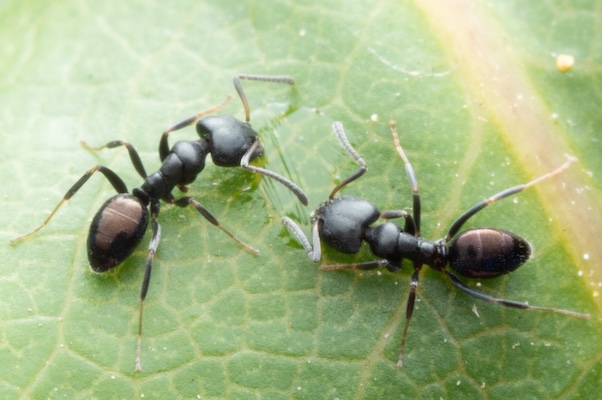
(Image credit: Black house ant – CC BY-NC 4.0. Karen Bennetts)
The black house ant is a shiny, black ant about 2 -2.5 mm long. It sometimes gets confused with the white footed ants, as it has with brown legs with pale ends.
The black house ant will build nests inside and outside buildings. Inside buildings they will build their nests in wall cavities or roof voids. The nests only have a single queen, which makes them relatively easy to control.
They will forage inside buildings looking for sugary foods and water (in warm weather).
Black house ants don’t bite or sting.
White-footed ant
The white footed ant is slightly larger than the black house ant (2.5 – 3mm) and tends to be a duller black colour. As their name suggests, they have pale ends to their legs and also have a large abdomen.
White-footed ants tend to build their above ground (in trees and ceilings). They can build large nests with multiple queens (reproductives) which makes them more difficult to control, as you need to kill all the queens to kill the nest.
Like the black house ant, white footed ants have a preference for sugary foods.
White-footed ants don’t bite or sting.
Brown ants in the house
There are two types of brown ant that can cause problems in Melbourne, the coastal brown ant and Argentine ant. Both species also cause problems outside the home.
Coastal Brown Ant
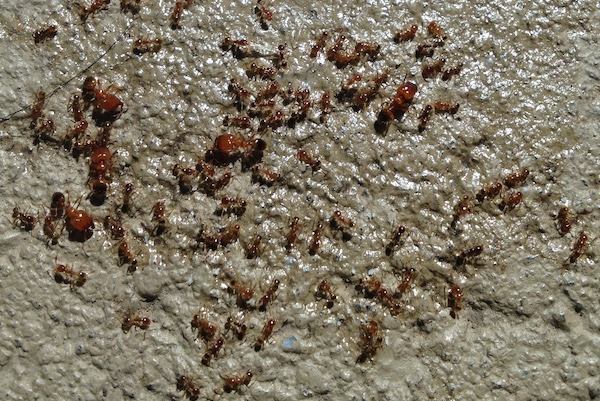
The coastal brown ant is a shiny red / brown ant. It is quite easy to identify, as the workers come in a range of sizes from 1.5mm – 4.5 mm. The larger workers have over-sized heads, which gives them their alternative common name – the big-headed ant.
Although they sometimes build their nests inside wall cavities, they more normally building they nests outside, often under pavers. This can cause significant issues as they dig up the dirt between pavers which is not only unsightly but can undermine the pavers. They can develop “super colonies” – massive nests with multiple queens covering large areas. Treatments can be effective in supressing numbers, but it can be virtually impossible to eliminate nests outside the home due to the size of the area they cover.
They have a preference for oily food and protein, which is why they are often a problem when petfood is left out.
They do not bite or sting.
Argentine ant
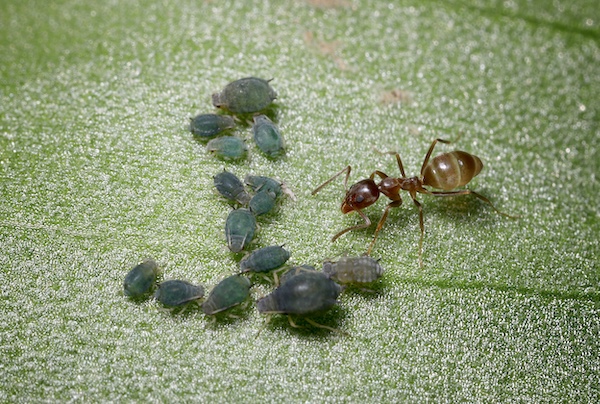
The Argentine ant is a dull, dark brown ant, 2.5 to 3 mm long.
They build large nests outside, often forming massive super colonies with multiple queens. The nests tend to be in the leaf litter under mulch, rocks and human building materials (such as plastic sheeting). They can infest whole neighbourhoods, which means they can re-invade treated areas. As a result, regular treatments are often required.
They have a very varied diet and are renowned for changing their food preferences. They will often prefer foods high in protein when the nest is growing with developing larvae but prefer sugary foods (especially honeydew) at other times.
They are quite aggressive and will deliver a mild bite, but no sting.
Sugar ants
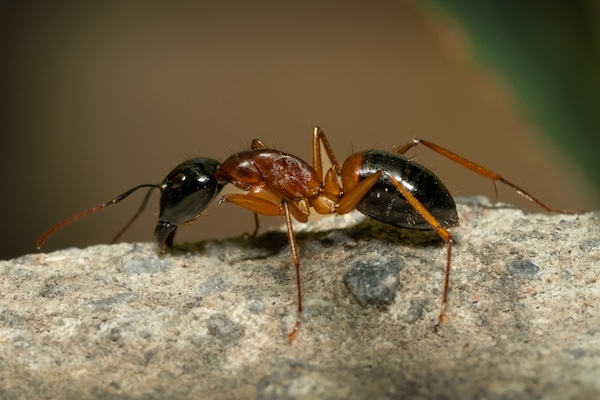
There are a number of types of “sugar ants”, one of the most common in Melbourne is the banded sugar ant. Their latin name is Componotus species, and a more accurate common name is carpenter ants.
Sugar ants are a large ant, up to 12 mm long. The different species come in various colours, but the banded sugar ant has a black head, orange thorax and orange and black abdomen.
Sugar ants build their nests in a variety of locations often underground, underneath rocks and logs, but also in holes in wood (typically rotting wood), which gave them their other common name, carpenter ants. Their nests have a single queen, which means they can be relatively easy to control by baiting.
As their name suggests, they are attracted to sweet substances such as honeydew. It is this preference for sugary foods which makes them a pest in kitchens. However, their activity is not always seen, as there are primarily nocturnal.
They are not a particularly aggressive ant. Although they do not sting, they do have a powerful bite and can spray formic acid.
Lawn ants
The two main types of ants found in the lawn in Melbourne are green-head ants and funnel ants.
Green-head ant
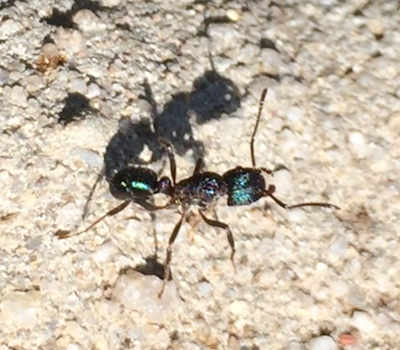
The green-head ant is a large black ant up to 8 mm long. It has a green / purple sheen which is very obvious when the sun is shining.
They build their nests in lawns and under rocks and logs. They typically only have one nest entrance (although large nests may have more), although there may be a number of nests in the lawn.
They prefer protein foods and generally scavenge for dead insects and other animals.
They are also very aggressive – they bite and deliver a nasty sting, which can cause swelling and allergic reaction. The sting site will often remain itchy for several days.
Funnel ants
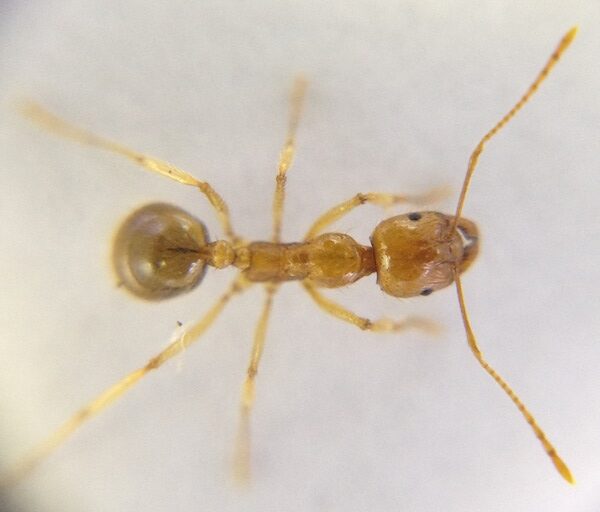
Funnel ants are a large, light brown ant, 5 – 8mm long. However, as they live underground you will generally only see the mud funnels they build.
These funnels are the excavations from their large underground nests. Apart from being unsightly, these underground nests can cause subsidence, which can result in injury and damage to lawn mowing equipment. Significant infestations can devalue property prices.
Funnels ants feed on insects which fall into their funnels and also on aphids which feed on the roots of certain grasses. This is why you often only seen funnel ants in certain neighbourhoods and on certain lawns.
Although funnel ants do bite, as they live most of the time underground, they are rarely encountered.
How we get rid of ants…
At Termites VIC we have a range of specific ant pest control treatments designed for the various ant species. Typically, we use a combination of professional, specialist ant baits and sprays to deal with the various ant species. Our treatments are designed to keep ants out of buildings and provide long lasting protection. However, for some species, regular treatments (once or twice a year) may be required, in order to deal with ants re-invading from surrounding properties.